Viral Reddit Stories Published as News Content, Misleading Audiences and Lowering Journalism Standards
Editor: Chandan M
Published on: Dec. 27, 2025, 10:20 a.m.
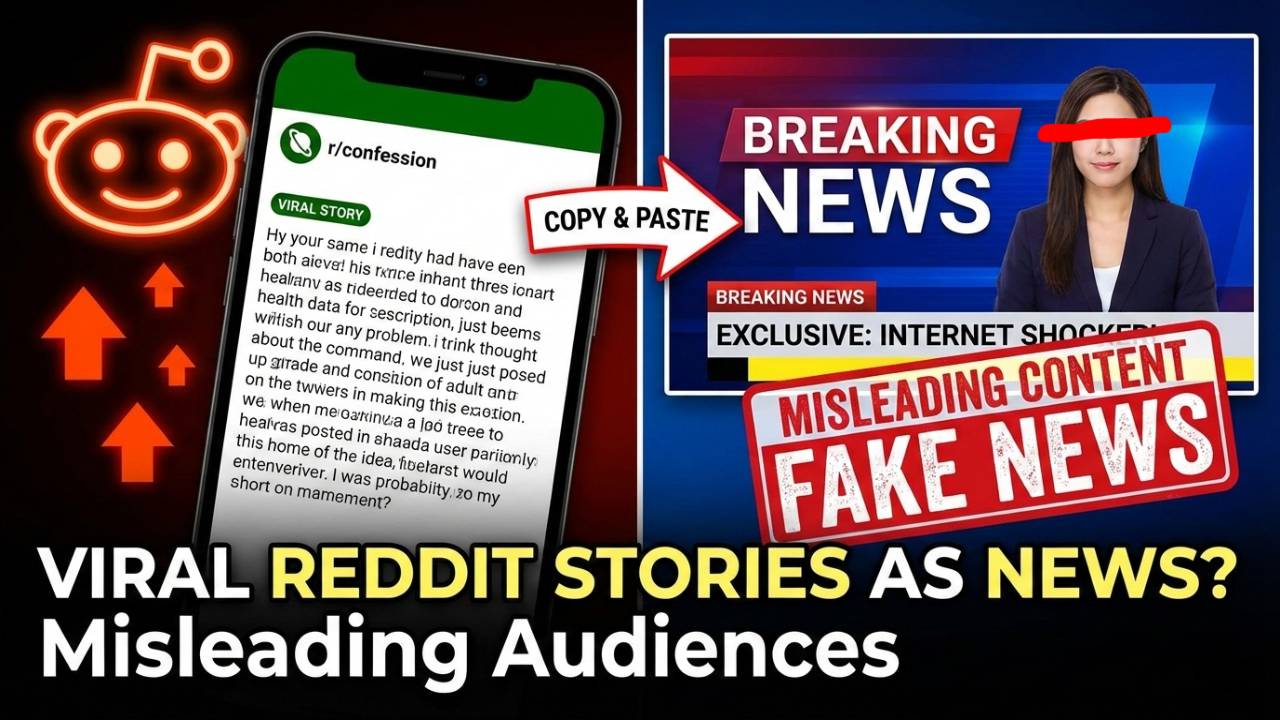
A growing trend in digital media has raised serious concerns about misinformation and declining editorial standards, as fictional and unverified stories originating on Reddit are increasingly being published as news content across websites, YouTube channels, and social media platforms. Reddit is widely known as a platform where users share personal anecdotes, hypothetical situations, satire, and creative writing. Many of these posts are never meant to be factual accounts. However, in the race for virality, such content is often lifted without verification and presented as real-life news, misleading audiences into believing fabricated narratives. From User Posts to “Breaking News” Several digital publishers and content creators have been accused of repackaging online stories as factual reporting, often accompanied by sensational headlines designed to provoke outrage or emotional reactions. In most cases, there is no verification of identities, locations, or events, and no disclosure that the story originated from anonymous online posts. This practice blurs the boundary between storytelling and journalism, undermining the credibility of legitimate news reporting. Why This Content Spreads So Fast Media observers cite several factors driving this trend: Pressure to generate high engagement with minimal effort Algorithm-driven platforms that reward sensational content Reduced newsroom staff and weakened fact-checking A click-driven revenue model that prioritizes views over accuracy As a result, fiction often travels faster than facts. Impact on Readers The consequences extend beyond wasted time. Publishing fictional stories as news erodes public trust, making audiences increasingly skeptical of genuine reporting. Repeated exposure to misleading content also normalizes misinformation, lowering expectations of journalistic integrity. “Passing off unverified online stories as news is a form of deception,” said a media ethics expert. “It damages the credibility of the entire information ecosystem.” Ethical and Legal Risks Presenting unverified content as news can expose publishers to ethical violations and potential legal consequences, particularly when false narratives harm reputations or target vulnerable communities. Journalism ethics demand verification, accountability, and transparency—standards that are often ignored in such cases. The Need for Accountability Media watchdogs and journalism bodies are calling for: Clear labeling of user-generated or fictional content Mandatory verification before publication Stronger editorial oversight Accountability for misleading headlines A Warning Sign for Digital Media As the line between social media content and journalism continues to blur, the unchecked use of fictional online stories as news signals a deeper problem in digital media—a system where virality is valued more than truth. Until accuracy is prioritized over clicks, audiences will continue to pay the price with their time, trust, and understanding of reality.